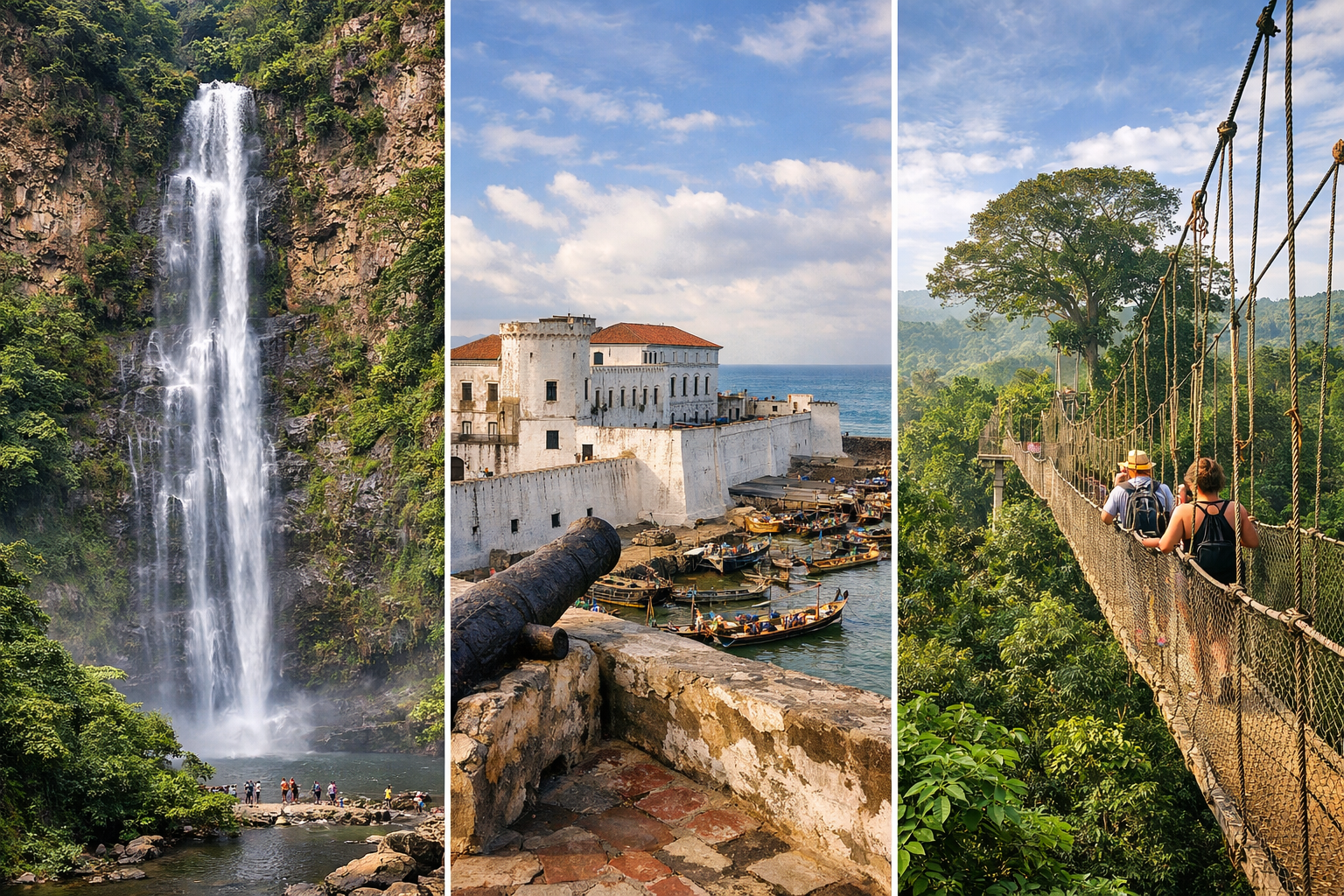
Ghana’s rise as one of Africa’s most meaningful travel destinations is built on a rare balance of nature, history, and community-led preservation. Beyond scenic landscapes and wildlife, the country is home to some of the world’s most significant heritage sites, including castles and memorials connected to the transatlantic slave trade. Together, these destinations form the foundation of Ghana’s eco-tourism and heritage tourism experience.
Below are some of the most important eco-tourism and heritage destinations in Ghana that highlight responsible travel, conservation, and cultural preservation areas strongly promoted by the Ghana Tourism Authority.
🌿 Wli Waterfalls (Volta Region)
Wli Waterfalls, the highest waterfall in West Africa, lies within a protected forest reserve near the Ghana–Togo border. The site combines hiking, birdlife, and scenic beauty with community-led conservation. Visitor fees directly support environmental protection and local development.
🐘 Mole National Park (Northern Ghana)
Mole National Park is Ghana’s largest wildlife reserve and a flagship eco-tourism destination. Visitors can experience elephants, antelopes, and diverse bird species through guided safaris that prioritize wildlife conservation and sustainable tourism.
🌳 Kakum National Park Canopy Walkway
Kakum National Park offers one of Africa’s most iconic rainforest experiences. The elevated canopy walkway allows visitors to explore the forest ecosystem from above while supporting biodiversity research and forest preservation.
🏰 Cape Coast Castle
Cape Coast Castle is a UNESCO World Heritage Site and one of Ghana’s most important historical landmarks. Once a major slave trading post, the castle now serves as a place of education, remembrance, and reflection. Responsible visitation helps preserve the site and sustain local heritage tourism.
🏰 Elmina Castle
Elmina Castle, the oldest European structure in sub-Saharan Africa, plays a central role in Ghana’s slave heritage tourism. Today, it stands as a powerful symbol of memory and connection, particularly for visitors from the African diaspora.
🕊️ Assin Manso Slave River
Assin Manso is a sacred memorial site where enslaved Africans took their final bath before being transported to the coast. Preserved as a place of healing and remembrance, Assin Manso represents respectful heritage tourism rooted in education and cultural dignity.
🛶 Nzulezu Stilt Village
Nzulezu is a unique community built entirely on stilts over Lake Tadane. Tourism here is community-managed, ensuring cultural preservation, environmental sustainability, and direct benefits to local residents.
🌊 Lake Bosomtwe
Lake Bosomtwe, formed by a meteorite impact, is Ghana’s only natural lake. Surrounded by traditional communities, the lake supports eco-lodges, canoeing, and cultural experiences that emphasize environmental protection and responsible tourism.
🌍 Why Eco-Tourism and Heritage Matter in Ghana
Ghana’s castles, memorials, forests, and wildlife reserves are preserved through responsible tourism practices that support conservation, education, and local livelihoods. These destinations:
-
Protect natural and historical assets
-
Empower local communities
-
Educate future generations
-
Strengthen cultural and diaspora connections
This integrated approach is why Ghana continues to be promoted globally as a leading destination for eco-tourism and heritage tourism.
🌱 Ghana: Where Nature, History, and Culture Meet
From waterfalls and rainforests to castles and memorial sites, Ghana offers travelers experiences that respect nature, honor history, and support communities. For visitors seeking meaningful, responsible travel in Africa, Ghana remains one of the continent’s most powerful and complete destinations.
Platforms such as AfroBookings help travelers discover and plan these experiences by connecting visitors with trusted tours, accommodations, and cultural activities across Ghana and Africa.
